

This kid-friendly recipe for Easy Turkish Delight inspired by The Lion, the Witch, and the Wardrobe is simple and quick to make in the microwave. One taste, and you might just be tempted to betray your siblings forever.

Turkish delight from The Lion, the Witch, and the Wardrobe has of course been on my radar for The Reader's Kitchen since day one. Talk about an iconic food moment in a book! One taste of this mysterious, enchanted treat was all it took to imperil the magical land of Narnia, possibly forever.
When I first ventured into Narnia myself in middle school—by reading the books and quite literally, in the role of Lucy in a school play—I dreamed endlessly of what this confection must taste like. I had never had real Turkish delight, but if it was compelling enough to cause a character to betray his entire family just to take another bite, I imagined it had to be the most delicious treat in the world.
About The Lion, the Witch, and the Wardrobe

British author C. S. Lewis wrote The Chronicles of Narnia, a set of seven fantasy novels, over the course of the 1950s. The Lion, the Witch, and the Wardrobe (1950) was the first (and most famous) book he published in the series, though he later wrote a prequel to the story, The Magician's Nephew, in 1955.
In The Lion, the Witch, and the Wardrobe, we are introduced to four siblings: Peter, Susan, Edmund, and Lucy Pevensie. Evacuated to a rambling house in the British countryside during World War II, the children discover a portal to the magical world of Narnia through the back of a wardrobe in a neglected spare room. There, they meet fantastical beings and talking animals, including Aslan, a great lion who is meant to be the true ruler of the land (and, to some, a Christian allegory). The children fight an epic battle of good versus evil, eventually becoming kings and queens of Narnia themselves.
The influence of The Chronicles of Narnia on literature and popular culture has been immense over the past 75+ years. There have been lots of stage and screen adaptations of the stories (including an upcoming version for Netflix directed by Greta Gerwig), and many of today's contemporary fantasy series for kids and adults, like Phillip Pullman's His Dark Materials series and Lev Grossman's The Magicians trilogy, are direct responses to C. S. Lewis's works. The tales of ordinary children being thrust into a high-stakes, magical world and fighting for good continue to resonate, and likely always will.
Recipe Inspiration
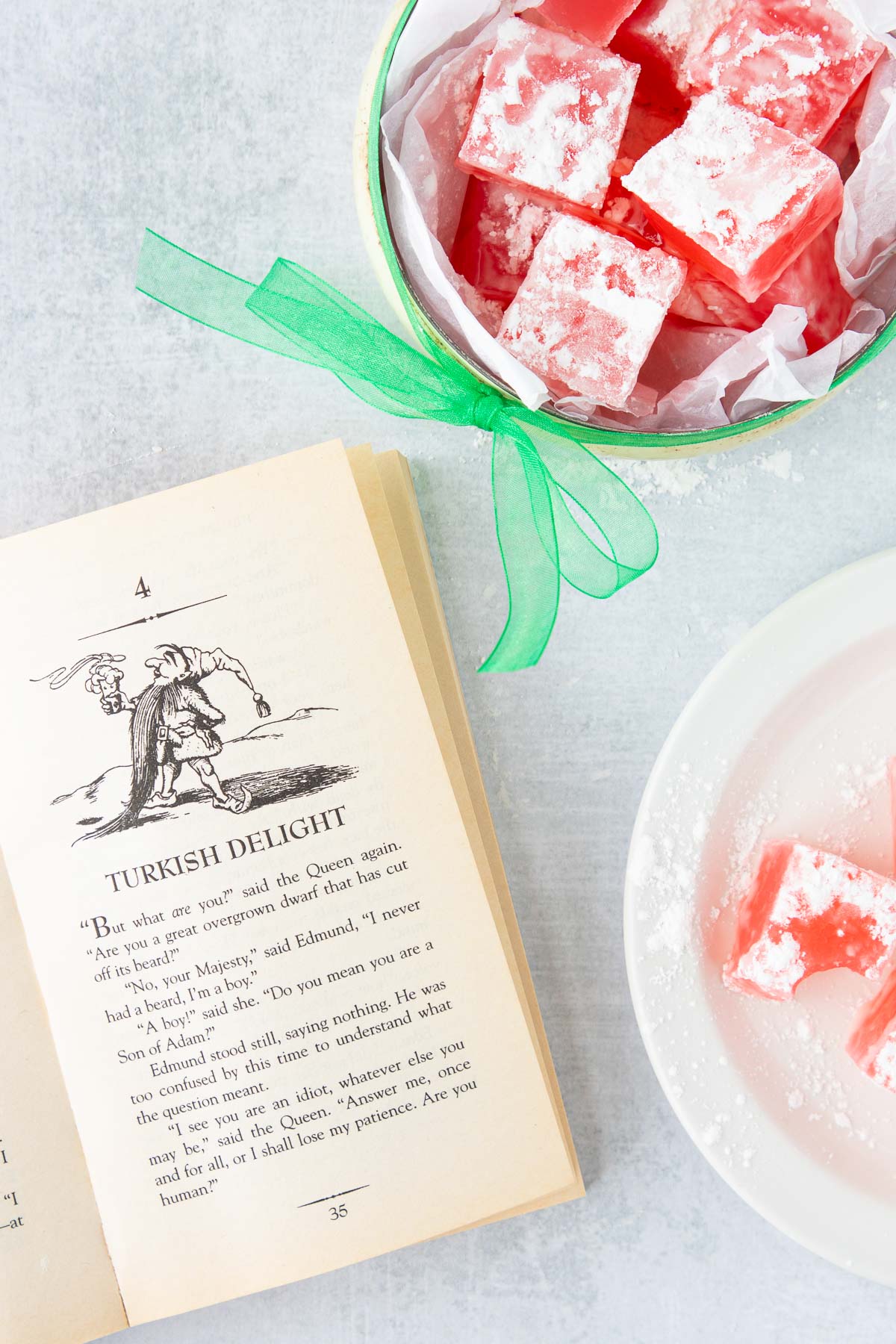
The Queen let another drop fall from her bottle onto the snow, and instantly there appeared a round box, tied with green silk ribbon, which, when opened, turned out to contain several pounds of the best Turkish Delight. Each piece was sweet and light to the very center and Edmund had never tasted anything more delicious.
— C. S. Lewis, The Lion, the Witch, and the Wardrobe
In The Lion, the Witch, and the Wardrobe, Narnia has been cursed into perpetual winter. The siblings learn this is all thanks to the White Witch Jadis, a false ruler of Narnia who has kept the land frozen in ice and snow for over a hundred years, with no end in sight.
Edmund, the youngest brother in the story, first encounters the White Witch without knowing any of these details. To him, she's an angelic queen who rescues him after getting lost in the snowy woods. She plies him with food and drink and lavishes him with the attention he never gets from his family. He falls under her spell, not realizing until much too late that he's being used and manipulated. And what clinches the deal for him? As much Turkish delight as he can eat.
What Is Turkish Delight?
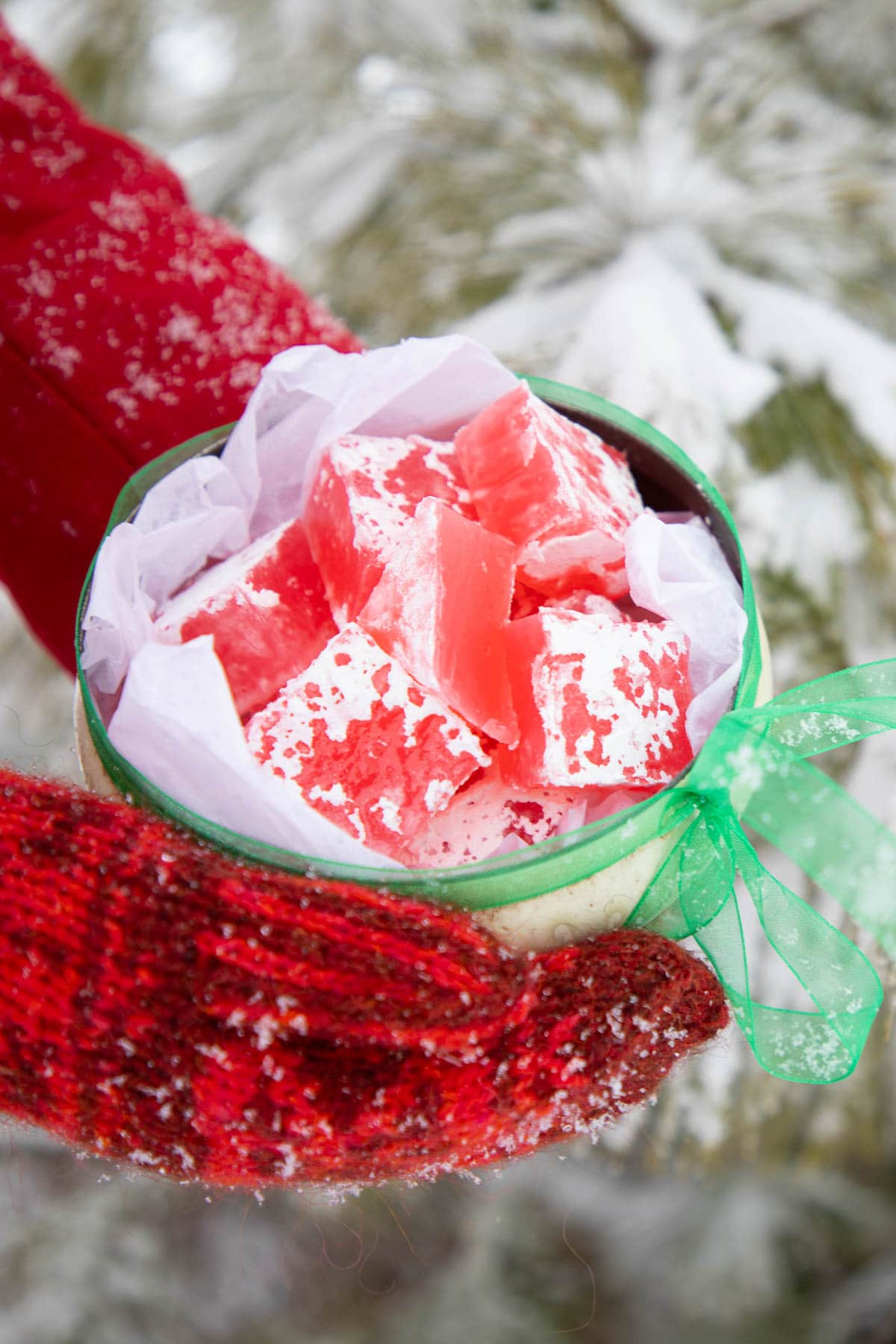
Turkish delight, or lokum, is a sweet that has been made in Turkey and the Middle East for centuries. It became popular in Britain the the 19th century, as European travelers to the Ottoman Empire came back with the candy, which they called "lumps of delight" and, later, "Turkish delight." In the 1940s, when The Lion, the Witch, and the Wardrobe takes place, sugar and candy were heavily rationed due to the war, so a taste of ultra-sweet Turkish delight would have been a rare treat indeed for a kid like Edmund. It's a fitting symbol of something that would have felt impossible to acquire without the help of some magic.
Traditional Turkish delight is made from a sugar syrup that is boiled and stirred for hours, thickened with cornstarch, and molded into small, soft candies that are coated with powdered sugar. The most common traditional flavors are rose, citrus, and pistachio, and the treat is meant to be very sweet, with a gummy, chewy texture. Alas, after all of that work, to some Western and especially kid palates, Turkish delight is, well....not what they expected.

My Version of the Recipe
Honestly, the fact that the traditional recipe is so hard to make and that result is so divisive almost made me abandon ship entirely with this recipe. A labor-intensive, dangerously hot sugar syrup that needs hours of attention felt like a non-starter for a recipe for kids, no matter how great a connection to the book it had.
However, to my delight (sorry, had to), just as I was giving up, I came across some recipes for Turkish delight that were made in the microwave. Along with the traditional cornstarch, the recipes also used gelatin to thicken the mixture, which sped along the gelling process significantly. I gave this technique a whirl and was pleasantly surprised by the results, so I tinkered to create something that lived up to what I imagined this treat might be like as a kid.
My version of this kid-friendly Turkish delight is definitely not the real thing, but it's quick and easy to make (cooking in less than ten minutes in the microwave) and so fun for kids to try. I toned down the intense sweetness a bit and balanced it with some lemon, and while I stuck with the traditional rose flavor as a nod to tradition here, you can make this treat any flavor you like. All the book tells us is that it's the "best Turkish Delight," so you can choose what that means for you.
Ingredients You'll Need
To make this Easy Turkish Delight, you'll need:

- Cold water
- Powdered gelatin: I developed this recipe with Knox Unflavored Gelatine, which is available in larger containers and individual small packets. If you use the packets, you'll need about two of them to measure the 2 tablespoons of powdered gelatin the recipe calls for.
- Granulated and powdered sugar: A mix of both of these sugars in the candy gives it the best sweetness and texture, and the powdered sugar also coats the finished candy so it doesn't stick to your fingers.
- Cornstarch and cream of tartar: Act as thickeners in the mixture.
- Lemon juice: You can use fresh-squeezed or bottled.
- Rose water: Rose is a traditional flavor for Turkish delight, but if it's not your favorite or you don't have it on hand, you can swap in another flavor of your choice. See the recipe card for more details.
- Food coloring: This is optional, but fun for matching your flavor of Turkish delight to its color! Remember: a little goes a long way; just two drops of red liquid food coloring turned my Turkish delight a vibrant pink.
As with every recipe, before you start cooking, make sure to measure out and prepare your ingredients ahead of time. Then, you'll have everything you need when you need it! For all of the ingredient measurements and details, see the recipe card below.
How to Make Easy Turkish Delight
The full recipe with detailed timing and instructions for this Easy Turkish Delight is below, but here are some key moments to look out for along the way:
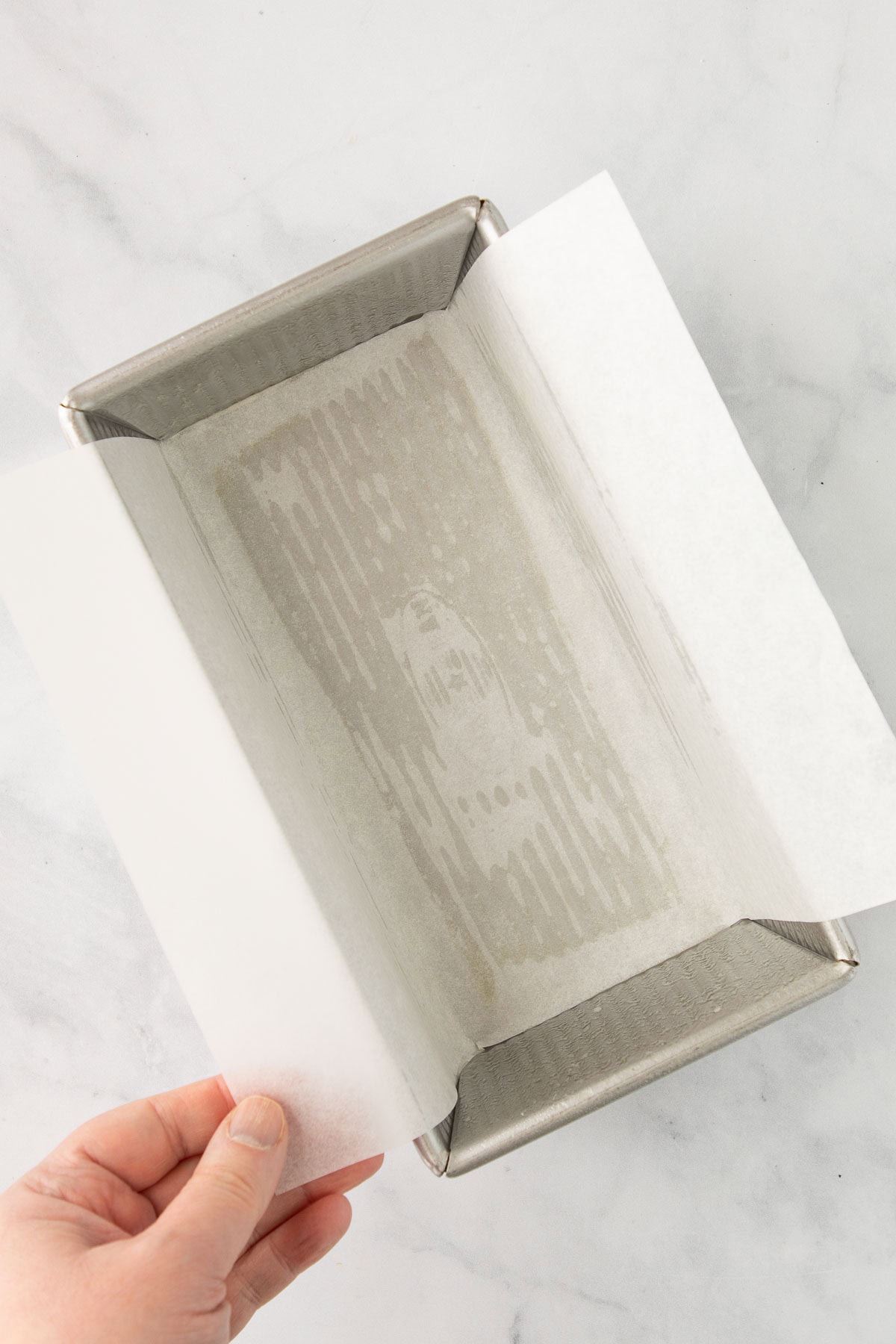
- Line a loaf pan: Spray a metal or glass loaf pan with cooking spray, then line it with a sheet of parchment paper, leaving some extra on the sides to use as handles to lift out the candy later.
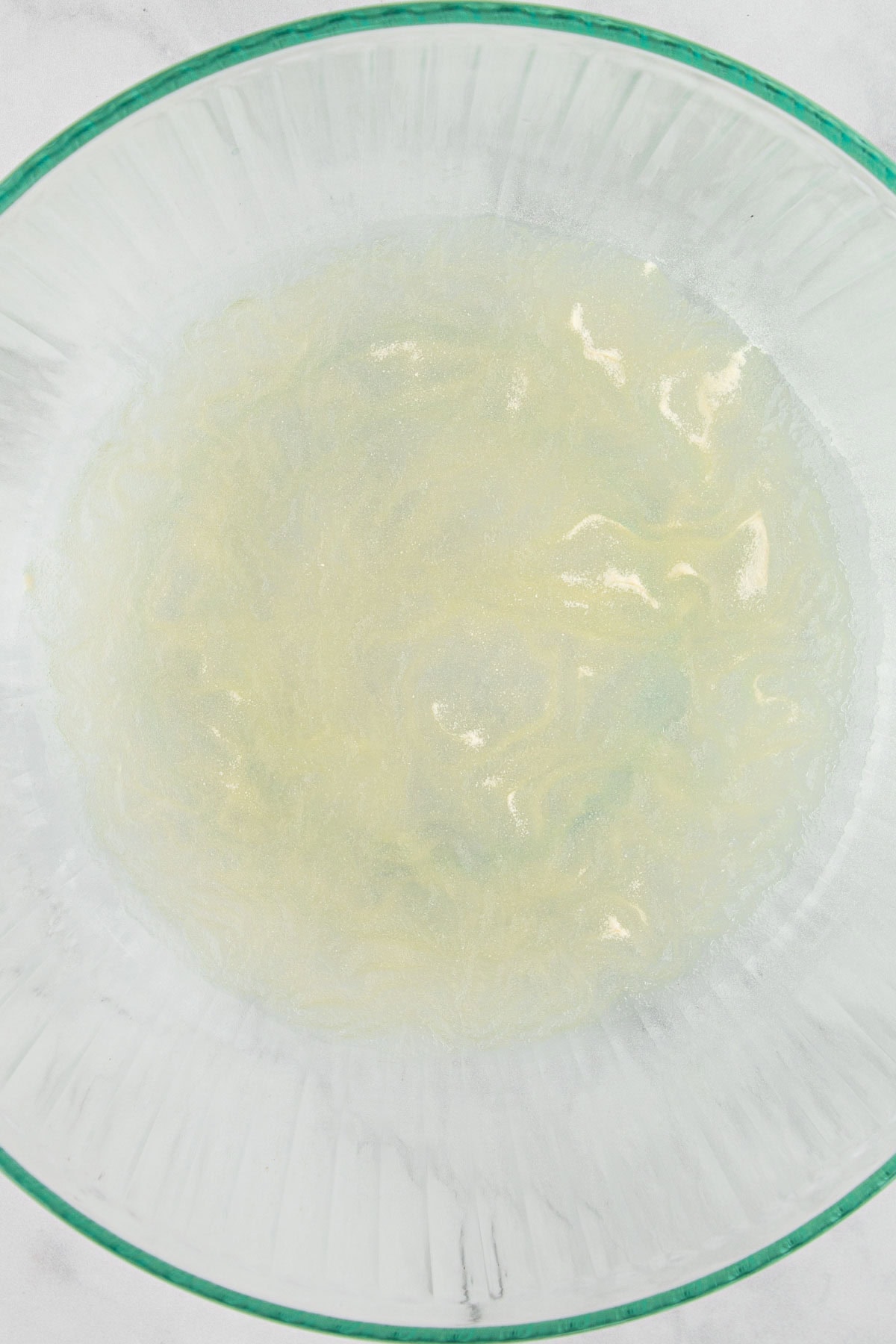
- Bloom the gelatin: Sprinkle the gelatin over the cold water in a large microwave-safe bowl. Let it sit until the gelatin blooms, becoming wet and gooey. Then, add the sugar and heat the mixture in the microwave until bubbling and liquid.

- Add more thickeners: Whisk the powdered sugar, cornstarch, and cream of tartar into the hot mixture, then microwave again until bubbly.

- Add the flavors and color: Add the lemon juice and rose water to the mixture, then whisk in a couple of drops of food coloring, if desired. Pour into the loaf pan and chill.
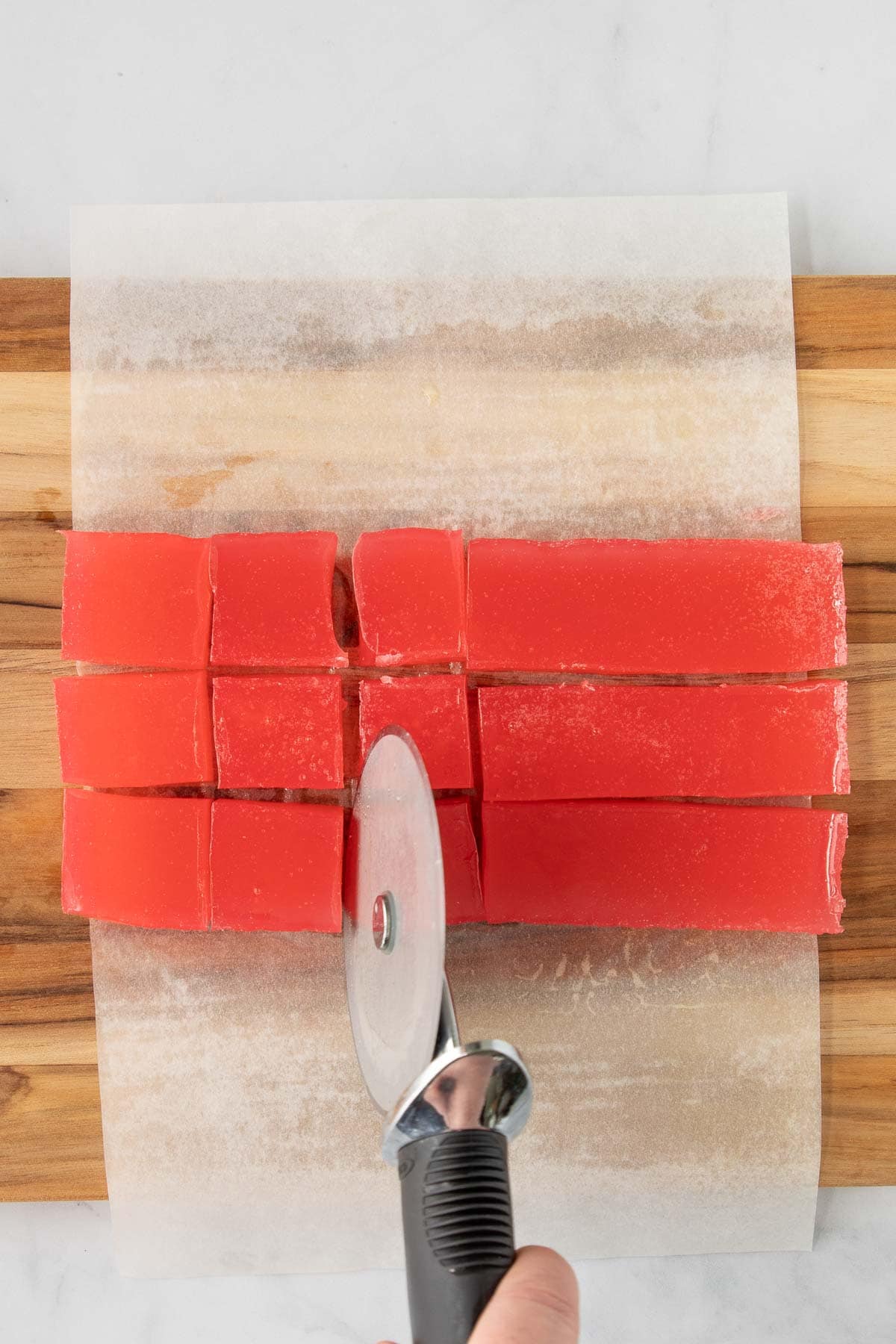
- Cut into cubes: After chilling the mixture in the fridge, lift it out of the pan with the parchment and cut it into small squares with a greased pizza wheel or chef's knife.
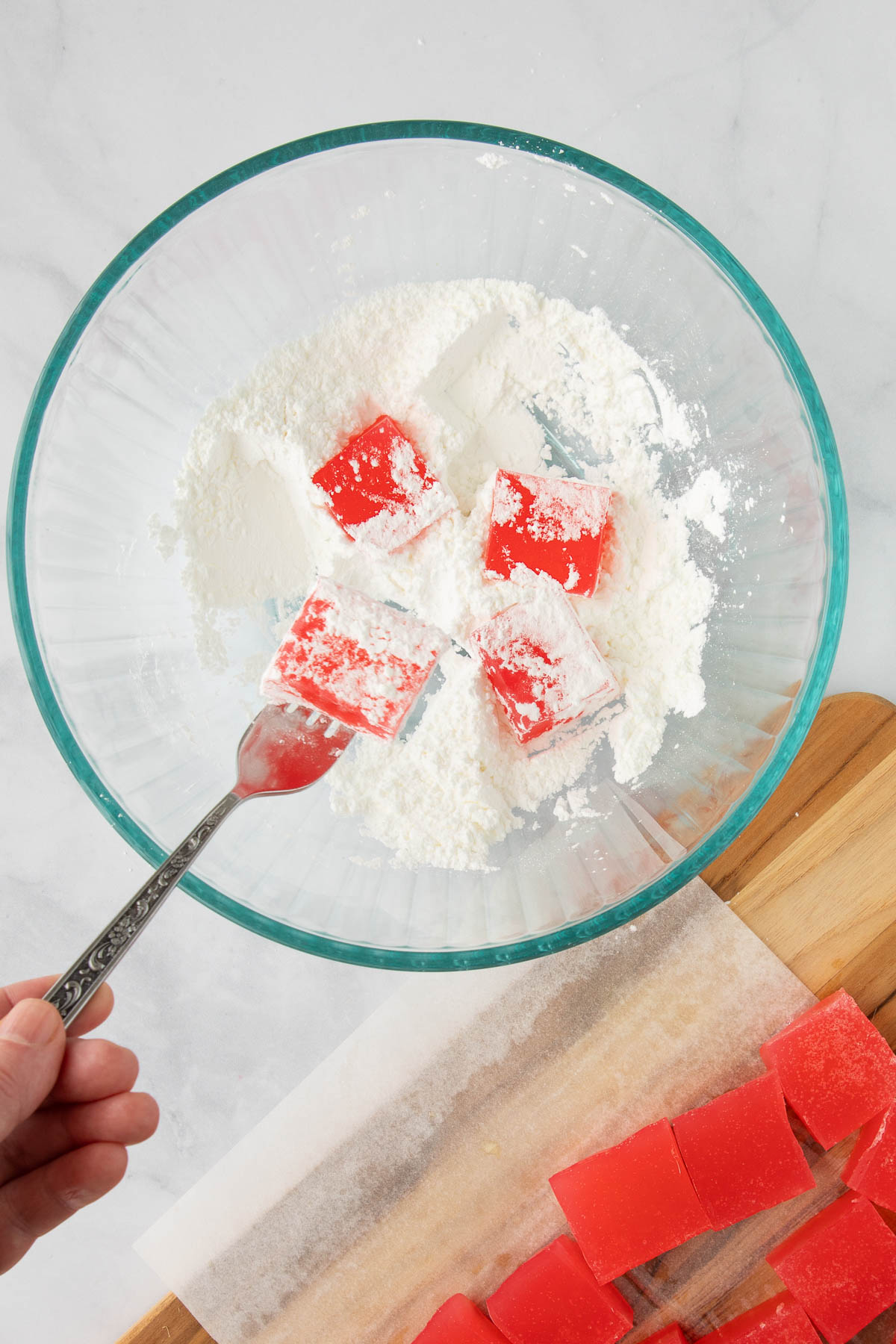
- Toss and enjoy: Toss the cubes in a mixture of more powdered sugar and cornstarch to coat, and enjoy!
Why This Recipe Is Great for Kids
I've spent years writing cookbooks and creating recipes that are safe, fun, and engaging for kids and home cooks of all ages. Here are some key features of this recipe that make it perfect for kids and families to make together at home:
- This recipe uses only the microwave for cooking, with no stovetop or oven needed. It's great for beginners or folks with limited access to a full kitchen. (For another easy microwave-cooked treat, try a mug cake!)
- It comes together much more quickly than traditional Turkish delight, and is much safer for kids, as it doesn't require attending to a hot sugar syrup on the stove.
- The gelatin ensures that this confection will set every time, rather than having to achieve a specific temperature for cooking the sugar to get it to gel.
- Kids can choose to flavor and color their Turkish delight however they wish, and can get creative in the kitchen.
Let's Cook!
Gather your equipment, measure your ingredients, and get cooking with this kid-friendly recipe! If you loved making it together, please leave five stars and share your stories in the comments.

Easy Turkish Delight
Good To Know
- Traditional Turkish Delight is made on the stovetop and takes hours of cooking to get to a precise temperature, with lots of stirring needed. This easy version uses the microwave instead. It’s not a traditional recipe, but is much easier for kids and quicker to make and enjoy.
- Rose is a traditional flavor for Turkish Delight, but if you’re not a fan (or would like to get creative!), you can use other flavorings instead. Try swapping in an equal amount of orange blossom water, or use ½ teaspoon of another flavor extract like lemon, lime, strawberry, or mint. Use food coloring that matches the flavor you choose, or keep it pink!
- Gelatin is used in this recipe to set the candy and give it its unique chewy texture. I have not tested this recipe with a vegan gelatin alternative. (Though if you do and it works, please share in the comments below!)
Equipment You'll Need
- Loaf pan (metal or glass)
- Parchment paper
- 2 Bowls (1 large microwave-safe, 1 medium)
- Whisk
- Clean kitchen towel
- Oven mitts
- Plastic wrap
- Fork
- Butter knife
- Cutting board
- Pizza wheel or chef's knife
Measure Your Ingredients
For the candy:
- Cooking spray
- 1 ¼ cups cold water
- 2 tablespoons powdered gelatin
- ¾ cup granulated sugar (5 ¼ ounces)
- ½ cup powdered sugar (2 ounces)
- ¼ cup cornstarch (1 ounce)
- ⅛ teaspoon cream of tartar
- 1 tablespoon lemon juice (squeezed and measured from ½ lemon, or bottled)
- 1 teaspoon rose water
- Red or pink food coloring (optional)
For the coating:
- ¼ cup powdered sugar (plus more as needed)
- 2 tablespoons cornstarch
Let's Cook!
Make the candy:
- Cooking spraySpray the bottom and sides of a metal or glass loaf pan with cooking spray. Line the pan with a sheet of parchment paper with extra hanging over the long sides. Press the parchment paper into the bottom and up the sides of the pan and crease the extra along the edges, forming handles (this will make it easy to lift the finished candy out of the pan later). Spray the parchment with more cooking spray and set the pan aside.
- 1 ¼ cups cold water, 2 tablespoons powdered gelatin, ¾ cup granulated sugarAdd the water to a large microwave-safe bowl. Sprinkle the gelatin over the top and let sit until softened and gooey, about 5 minutes. Add the granulated sugar to the bowl and whisk until well combined.
- Transfer the bowl to the microwave and cook on high power for 1 minute at a time, whisking in between each minute, until the sugar has dissolved and the mixture is bubbling and has turned clear, 4 to 6 minutes. Be careful when whisking, as the bowl will be hot and the mixture may bubble up and foam.
- ½ cup powdered sugar, ¼ cup cornstarch, ⅛ teaspoon cream of tartarFold a clean kitchen towel in half and set it on the counter next to the microwave. Use oven mitts to carefully remove the bowl from the microwave (it will be VERY hot!) and set it on the towel. Add the powdered sugar, cornstarch, and cream of tartar to the bowl and whisk until well combined.
- Return the bowl to the microwave and heat until bubbly and foamy throughout, 1 to 3 minutes. Open the microwave door and let the mixture cool and calm down a bit, 1 to 2 minutes; the mixture will look thick and syrupy.
- 1 tablespoon lemon juice, 1 teaspoon rose water, Red or pink food coloringUse oven mitts to carefully remove the bowl from the microwave (it will be VERY hot!) and set it on the towel. Add the lemon juice, rose water, and a couple of drops of food coloring, if using, and whisk until evenly combined.
- Pour the mixture into the greased, parchment-lined loaf pan. Let cool slightly, about 15 minutes. Cover the pan loosely with plastic wrap and transfer to the refrigerator to chill until firm and set, at least 1 hour and up to overnight.
Coat the candy:
- ¼ cup powdered sugar, 2 tablespoons cornstarchWhen the candy is ready, in a medium bowl, use a fork to mix together the remaining powdered sugar and cornstarch until evenly combined.
- Remove the Turkish delight from the refrigerator. Use a butter knife to loosen the ends of the slab from the pan, then use the handles of the parchment sling to lift the candy out of the pan and transfer to a cutting board. Spray a pizza wheel or chef’s knife lightly with cooking spray, then use it to cut the slab lengthwise into long strips, then crosswise into small squares.
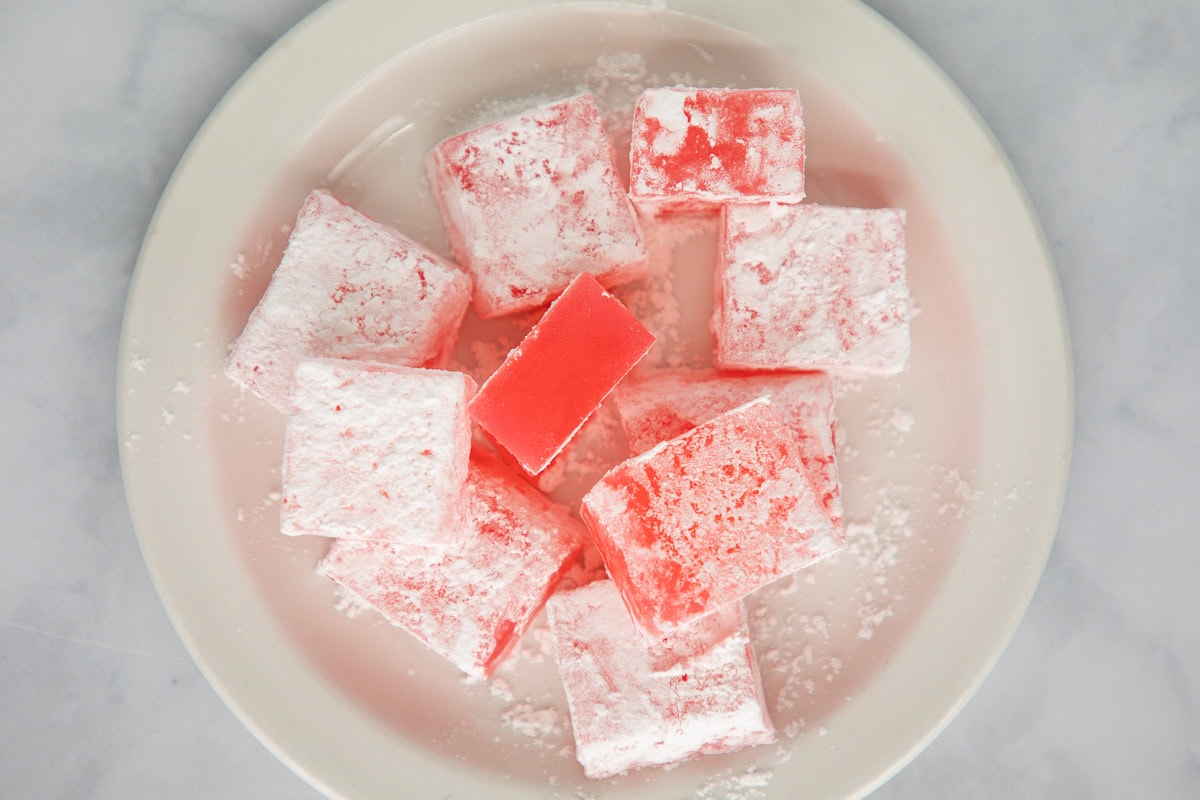
- Working with a few at a time, transfer the candies to the bowl with the powdered sugar mixture and toss with the fork or a spoon until evenly coated. Shake off the extra coating from each piece, then transfer the coated Turkish delight to a serving platter or to a wide, shallow airtight container. Serve, or store in the refrigerator for up to 1 week. The coating will be absorbed as the candy sits, so toss it in more powdered sugar before serving if it’s looking sticky.
Conversation Starters
As wait for your Turkish delight to chill and sit down to enjoy it together, talk about what it was like to make the recipe and the themes in The Lion, the Witch, and the Wardrobe. You can help young readers make connections to the book and share your own answers, ideas, and stories with them with the following prompts:
- If you encountered a magical witch and she offered you anything to eat in the world, what would you pick, and why?
- Does this Turkish delight taste like what you imagined from the story? Why or why not?
- If you could enter another world through a special place in your house, where would the portal be, and what would you like the world to be like?

Comments
No Comments